Interview
Luc Binst lays Antwerp on the ground
WRITER WOOL & WIRE x BINST ARCHITECTS
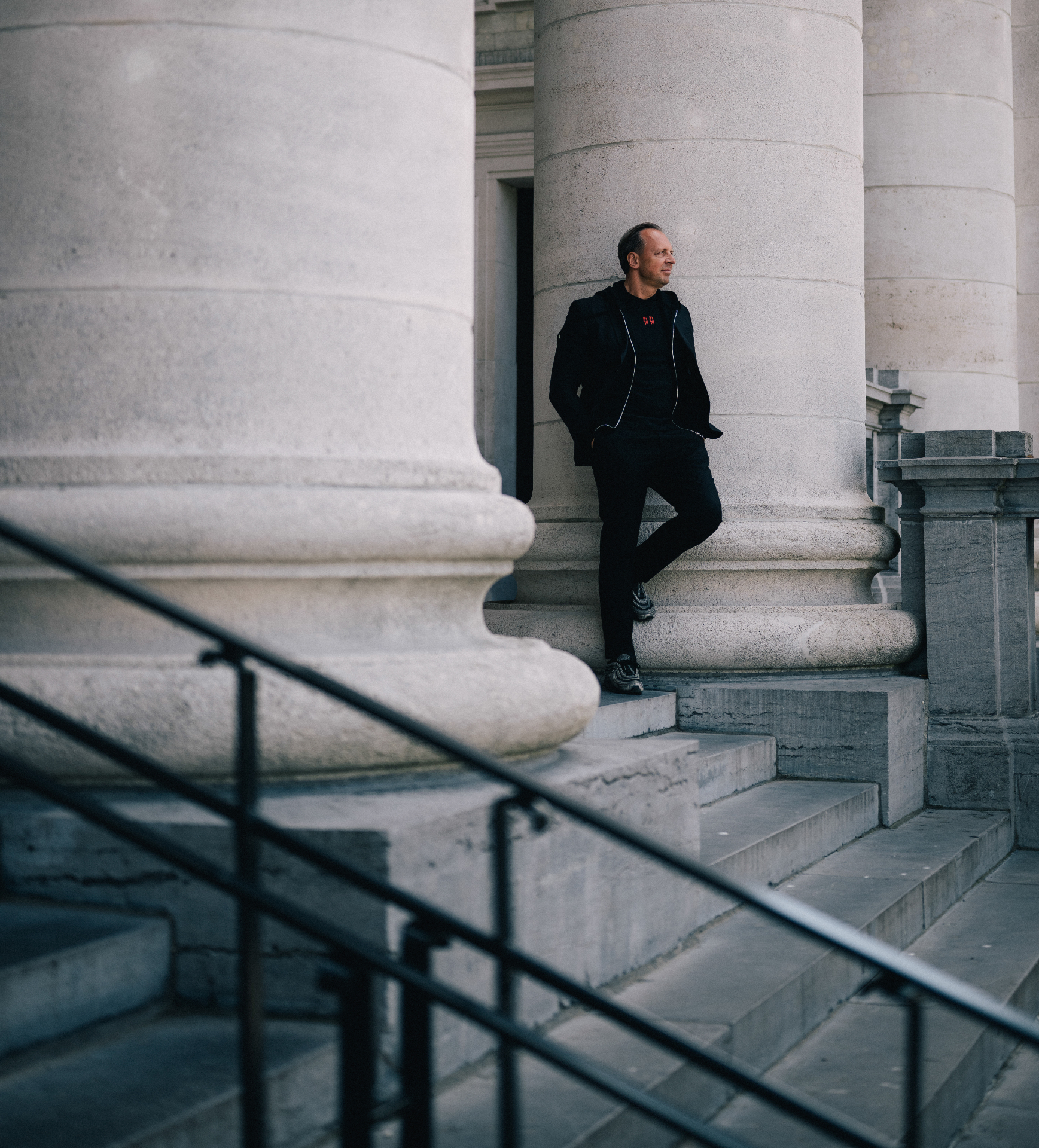
For Luc Binst, interior and architecture are inseparable - conceptually, always. It’s a conviction he keeps returning to: the force of the furniture-object versus the shell around it, and how those two scales - of a building and of an object - speak to one another.
It’s a dialogue that drives his entire body of work. From day one - and still today - he designs buildings that sit in the landscape like furniture-objects, and conversely turns buildings into furniture-objects after the fact.
His career began, fittingly, with an interior commission in Brussels. Three objects gave the project its shape immediately: a large steel slider, a long laminated beam, and a thick plinth of green artificial grass with carved slots for cassettes and videotapes, rolled out like a carpet. “I began my career designing furniture-objects, like a kind of building installation. And I’ve kept working that way ever since.”
That first project earned him, as a young architect, two full pages in De Morgen in 1999. It became his calling card. That decades later he can go from that first improvised mat to a real rug by Wool & Wire - he finds it wonderful. The circle closes.
Ask him how a design comes about and the conversation returns to that same notion of consequence. Within the interior, and within design in general, his buildings must always project a sense of inevitability. A certain toughness, an expression. “My architecture had to stand. It has to stand.”
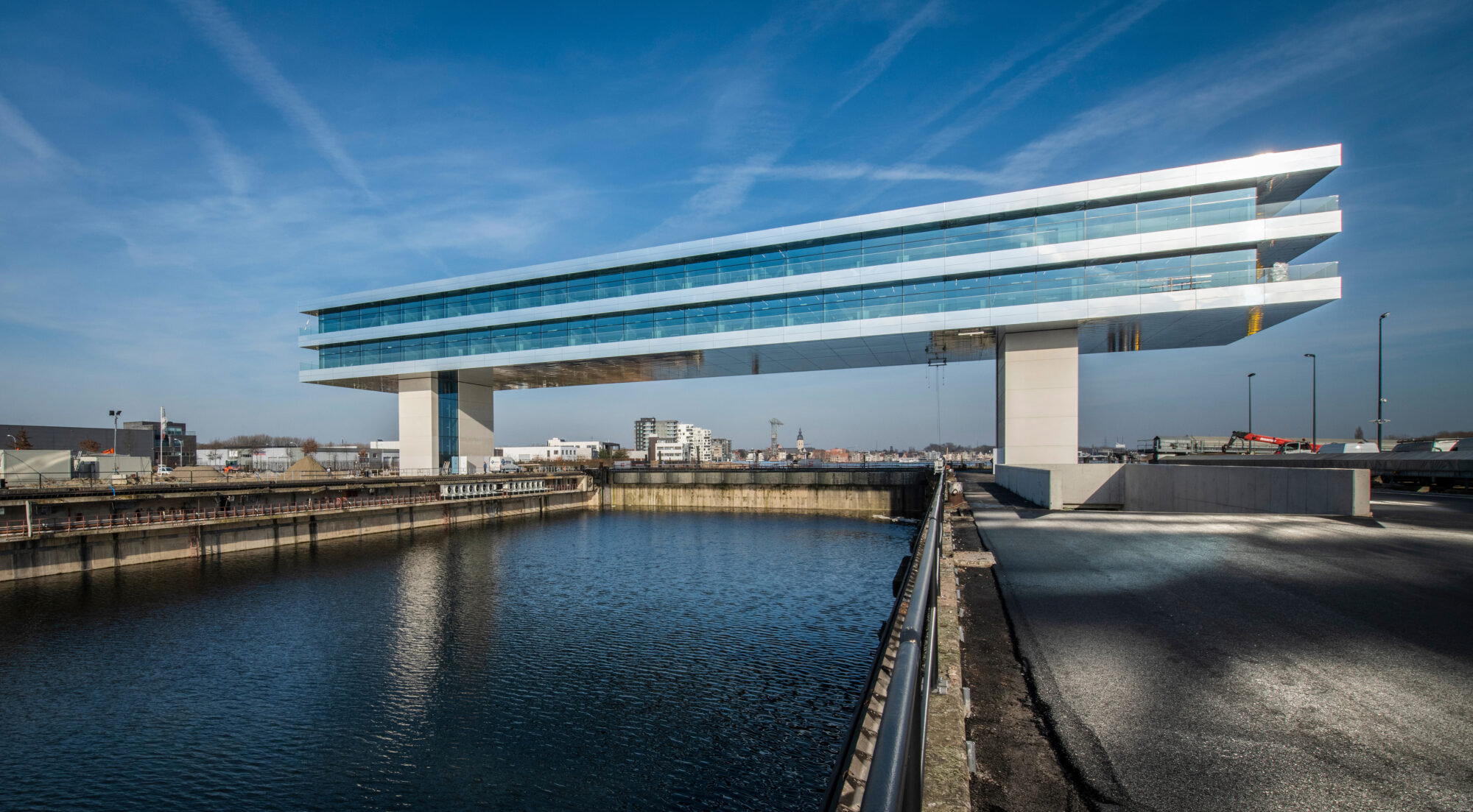
In the 27 years since, he has applied that early DNA at ever larger scale to buildings across Belgium: the cultural, the object-like, the materialisation, the expression, the dynamism, the power. The Cordeel office building in Temse stands like a table above the water, an office villa twenty metres above the ground. A house in Bertem near Leuven rests on five legs - “exactly the Five Table by Lensvelt, a table with five legs” - with simple grass beneath.
“That interaction between the skin around a building and the building itself - that’s what I find truly interesting.”
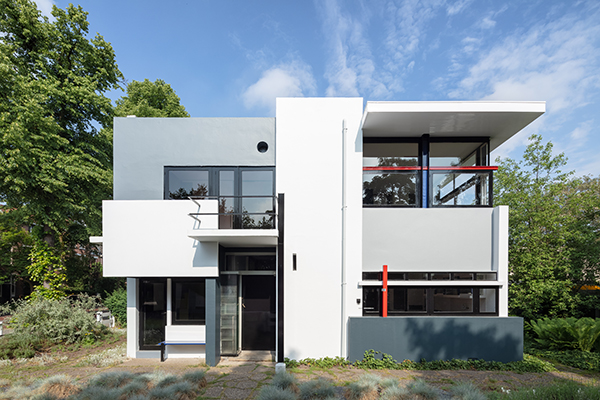
That way of thinking grew during his studies. At Sint-Lucas he first did a few years of Art Humanities, before choosing architecture. In those years he was a great admirer of the Bauhaus style, and one of its finest examples is, for him, still the Rietveld Schröder House in Utrecht. “It’s fantastic. One of the most iconic houses of the 1920s.” Early modernism, a house now a hundred years old. “When you walk in, exterior and interior are one scene, one story. You’re right inside the veins of Gerrit Rietveld or Walter Gropius.”
That is precisely what he looks for in his own work. A building should stand in the landscape like a maquette, with interior and outer shell as one given, one piece of storytelling.
“When you walk in, exterior and interior are one scene, one story.”
It is in that conviction that the circle his talk is about gradually took shape. On the Aequor project - a small island of luxury apartments - the rug in the lobby was designed along with the building: a rendering of the rear façade’s layout, the drawn mesh of the bedrooms. “From that, I began distilling rugs. From the graphic façades, from the graphic pattern of façades, we began creating underlays from which to make carpets.”
And it is precisely that movement - a building translated into a tangible object - that now, for the first time, closes into a finished product. The rug he designed for Wool & Wire is entirely derived from the Aequor building. “A natural extension. Like a thumbprint, or a wink at that building.”
The rug is called Antwerp - and in that lies a beautiful coincidence. Binst is a thoroughly Antwerp designer, the source building stands in Antwerp, and the rug itself premieres at Antwerp Design Week. A designer who, quite literally, lays Antwerp on the floor.
The address within the event is, for him, an important milestone. There used to be the Antwerp Six in fashion; now he’s presenting an office with 53 years of history - and he’s 53 himself. “I’m as old as the history of the office. It’s coincidence, but it feels nice.”
Does Antwerp have a reputation for its architecture? “Yes, more and more.” The bridge with design matters there, as does commissioned work. And with Antwerp, he lays it - quite literally - on the floor.
“This is Belgium. This is Antwerp. This is us - Luc Binst and Wool & Wire.”